



adidas Running


INTRODUCTION
TEAM SIZE
6 members
I was part of the design team at adidas Running, that was building a sports tracking app, helping athletes track their progress. It was also well integrated within the adidas ecosystem in order to drive sales and membership engagement.
My primary objective was to enhance the user experience of the adiClub membership program within the sports app, aiming to bolster membership engagement for adidas. This entails implementing gamification elements throughout the membership journey, integrating adiClub points and rewards strategically to incentivize participation and foster deeper user engagement.
MY ROLE
May 2022 - Nov 2023
TIMELINE
Motivating users with adiClub and Gamification
When working for adidas Running, one of my tasks was to gamify the fitness tracking experience with the goal of increasing user engagement and customer retention.
STAGE ONE: UNDERSTAND

adidas Running is a sports app that allows you to record your workouts and review your statistics.It’s available for iOS and Android devices and is part of adidas' digital ecosystem for fitness enthusiasts.
adiClub is the adidas loyalty program where members can earn points to level up and unlock exclusive rewards, special offers, events and more. It has 9.7 million members across 23 countries.

1%
Percentage of users moving to the e-commerce app via adiClub membership.
0.0003%
Members can afford to redeem the most expensive reward at 8k points.
10%
Members can afford to redeem the cheapest reward of 1k points.
EXISTING STATE
The management at adidas Running approached the membership team with a request to enhance adiClub member engagement and retention rates.
While we already had a significant global membership - 9.7 million members, the percentage actively engaging with adidas' digital ecosystem was much lower, around 1%.
User research and app usage data revealed two key challenges contributing to this low engagement:
-
Many users struggled to understand how to use or redeem adiClub points, as they lacked a clear understanding of how the system worked.
-
There were too few accessible digital rewards. Even the most affordable reward was within reach of only 10% of members, limiting participation.
Insights from user interviews & quantitative data from usage metrics
42% of members don't understand properly what adiclub actually is.
This data is based on the users who answered the adiClub feedback already inside the membership screen. The true % is probably higher.
300 monthly complaints due to issues with Premium
The new redemption Flow should improve this and reduce the compla
80% of the members have not used any of the adiClub awards.
The new redemption Flow should improve this percentage (to be measured). Opportunity to expose the rewards and make it clear to users how they can use them.
Hard to level up using just the sports app which demotivates users
Need to make it clear to users that sports app account is the same as e-commerce account.
33% of the members don't know how to earn adiClub points.
Again, the percentage must be higher. Opportunity to onboard users when they first open the profile and increase clarity.
Building engaging user journeys within the sports app
Create personalised journeys / Long-term strategy since it needs to be aligned and supported from adidas.
BETTER UNDERSTANDING OF OUR USERS
A closer look at our target group and their needs
The research team did a great job at focusing more on defining our target audience better for our sports app. This was an added benefit for me to get to understand the user and their needs. I could now focus on the core drives of the target audience with a better understanding of their needs.
Our target audience was identified as:
1 - Beginners/starting back
2 - Recreational leisure runners
3 - Recreational event runners


The challenges faced by athletes with low to medium fitness levels, include difficulty selecting the right running gear, maintaining motivation, and dealing with self-criticism when goals aren’t met. Their needs also inckey areas of support needed, such as guidance, motivation, injury prevention, community support, and proper nutrition, to help them stay consistent and improve their running experience.
STAGE TWO: DEFINE
PROBLEM STATEMENT
Users struggle with a lack of awareness and engagement throughout their journey, leading to reduced motivation and participation. The current experience lacks clear progress feedback and meaningful recognition of user achievements. Additionally, the reward system is not fully integrated, limiting opportunities for users to earn and redeem rewards in a seamless and enjoyable way.
Our goal is to:
-
Improve the foundational experience by increasing awareness, providing real-time progress feedback, and celebrating user achievements?
-
Enhance engagement through gamification by implementing a unified reward system, expanding earn-and-burn opportunities, and creating delightful adiClub moments?
The problem statement could broadly be classified into the below categories:
Fix the basics
-
Increase awareness
-
Show progress feedback
-
Celebrate user achievements
Gamify the experience
-
Unified reward system
-
Earn and burn cases
-
Delightful moments
MY HYPOTHESIS
By meaningfully connecting the adiClub gamified experience in each step of the member's fitness journey, we can motivate users to achieve their goals and stay loyal to the brand.
+
Fitness tracking + adiClub gamification = increased loyalty and retention
THE POWER OF GAMES
This quote reflects on how powerful games are and why gamers spend so much time on them.
It’s because when they are playing a game, they are actually happier working hard than relaxing, or hanging out. Human beings are optimised to do hard meaningful work. And gamers are willing to work hard all the time, if they’re given the right work - and that is where gamification becomes important. And why you will find so many products trying to gamify their experience, even for mundane tasks.


ADICLUB MEETS OCTALYSIS
Incorporate the Octalysis framework into the adiClub membership journey
“Gamification is the craft of deriving fun and engaging elements found typically in games and thoughtfully applying them to real-world or productive activities.” - Yu-kai Chou
Initially, I took a comprehensive approach to understand the entire membership journey and identified the appropriate areas to integrate the different drivers of the Octalysis framework. The "earn and burn" cycle denotes the recurring process wherein users accumulate adiClub points through various activities and subsequently redeem them for rewards, thus perpetuating the cycle.

STAGE THREE: IDEATE
DESIGN THINKING WORKSHOP
Brainstorming sessions
At this point, I also involved other stakeholders and did a little workshop where we all got together and brainstormed on ideas to gamify the whole experience. As designers, it is always good to involve other stakeholders in the ideation phase as well. I firmly believe that designers co-own the experience with others while driving design thinking and not completely own the experience. And so we did indeed come up with some really cool ideas.

THE FALLACY OF PBL
Don’t focus only on the superficial layer of games

But at this point, I realised, we were focusing too much on the superficial layer. We were trying to forcefully just add cool game like elements wherever we could. We were not diving deep into what user’s actually feel. In fact You-kai goes on to say that “a product might have all the “right game elements” but still be incredibly boring or stupid if they do not focus on their users’ motivations first. ””
Yukai does a great job at explaining this in his book where he talks about the fallacy of PBL - points badges and leaderboards. Just adding these things would not not automatically make the experience gamified.
There were many extrinsic motivators that came up during the ideation phase. Multiple studies have shown that when you introduce extrinsic motivators, people lose the intrinsic motivation to do the same activity which affects the long term engagement. In fact, there is a term for this - Over Justification Effect.

The education system is a great example to understand this effect best. When you think about the intrinsic motivators in education; its the desire to learn or gain knowledge but the extrinsic motivators like good grades and meeting your parents epxectations takes over. Which is why most students end up learning only for the extrinsic motivators and end up forgetting things once they are not no longer required.
INTRINSIC MOTIVATION
Dealing with over-justification effect by focusing on Right Brain Core Drives
But at this point, I realised, we were focusing too much on the superficial layer. We were trying to forcefully just add cool game like elements wherever we could. We were not diving deep into what user’s actually feel. In fact You-kai goes on to say that “a product might have all the “right game elements” but still be incredibly boring or stupid if they do not focus on their users’ motivations first. ””
Yukai does a great job at explaining this in his book where he talks about the fallacy of PBL - points badges and leaderboards. Just adding these things would not not automatically make the experience gamified.


By focusing on the below three right brain core drives, we could deal with over justification effect and keep our users intrinsically motivated
Social Influence
Make the experience more social by creating environments that foster socialising
+
Empowerment
Add more choices and provide users with multiple routes to reach the Win-State
+
Unpredictability
Add unpredictability by introducing variable rewards and adding a layer of intrinsic excitement
STAGE FOUR: PROTOTYPE
Motivation at the core: Increase awareness around adiClub by integrating gamification into the main screen to drive users.

BEFORE

AFTER

INCREASE AWARENESS
Non-intrusive paced awareness and education


How transitioning from a generic GPS location dot to displaying the athlete's shoe could enhance engagement and potentially boost Customer Lifetime Value (CLTV)

DEFAULT VIEW
EXPIRED SHOE
PROMOTING ADICLUB

OWNERSHIP & POSSESSION (GAMIFICATION)
Colours are more than just indicators of progress, they symbolise achievement. Each colour change motivates the athlete to safeguard what they have earned.
CELEBRATE USER ACHIEVEMENTS
Recognizing user progress with badges and delightful messages can boost motivation and engagement.


DELIGHTFUL MOMENTS
Even the smallest achievements deserve celebration. A subtle confetti burst can reinforce progress while also raising awareness about adiClub.
EARN AND BURN CASES
Rewards for everyone - introducing cheap rewards that get athletes involved at the early stages of their journey.


Octalysis Framework (gamification)
Focusing on the three right brain core drives
Social influence + Empowerment + Unpredictability


SOCIAL INFLUENCE
Make the experience more social by creating environments that foster socialising
Building on the social influence core drive, luckily for us, we already have the perfect ingredient which is adidas Runners. adidas Runners is this local community of runners in different cities who come together and train together. The team even includes a captain leading and motivating the others. Given its importance in the social aspect of the app, we worked on integrating it better within the sports app.
EMPOWERMENT
Add more choices and provide users with multiple routes to reach the Win-State
Building on the empowerment of creativity and feedback core drive, where we give users multiple ways of reaching their fitness goals as well as earning adiClub points in the process. We have different training plans, different challenges and so on.


UNPREDICTABILITY
Add more unpredictability by introducing variable rewards and adding a layer of intrinsic excitement
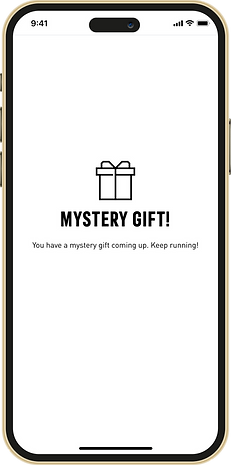
And finally, adding more unpredictability and curiosity by introducing the concept of mystery gifts when users go on a run.
OTHER LEARNINGS

Going beyond the Octalysis framework and using the , I also kept these three things in mind as well while coming up with solutions. Autonomy - where users have a sense of control in their actions; Competence - the need to feel capable and Relatedness - which is the need for social connection.
OCTALYSIS SCORE
Convincing stakeholders using the Octalysis Score
Now with all of this now in place, ideally everything should go smooth. But we’ve all been in place where convincing stakeholders has just not been an easy task, despite having all the great ideas. Luckily for me, there was a way around this. Numbers. The unbeatable persuasion tool.This is where I used the octalysis score to drive things forward. Yu-kai came up with this and it has a pretty interesting way of being derived.


You-kai calculated the Octalysis score for FB and it received a score of 448 which is pretty good, which explains its success in the past. You can see here that FB is doing really well with social influence, no surprises there but also lacks epic meaning and calling.
I did something similar for our product before the gamification ideas, and came up with a score of 130. And this helped with getting the support of the rest of stakeholders in realising that we have a lot of work to do with gamification.

Most of what I have written about is based on this book called Actionable Gamification by Yu-kai Chou.. It really helped me get started with this project.


GIVING BACK TO THE COMMUNITY
I had the privilege of presenting this case study at UXCon Vienna 2023 and later discussing it in an online session with students from Fachhochschule St. Pölten.
Feel free to share this with anyone who might find it useful, it’s a great example for those new to gamification!